
 EN
EN


The tapered edge gypsum board is one of the most widely specified interior construction materials in commercial and residential building projects. Its recessed longitudinal edges allow installers to apply joint compound and tape within a flush finish plane, producing smooth, seamless walls without visible ridges. Understanding the production specifications behind tapered edge gypsum board helps procurement professionals, architects, and contractors make well-informed sourcing decisions.
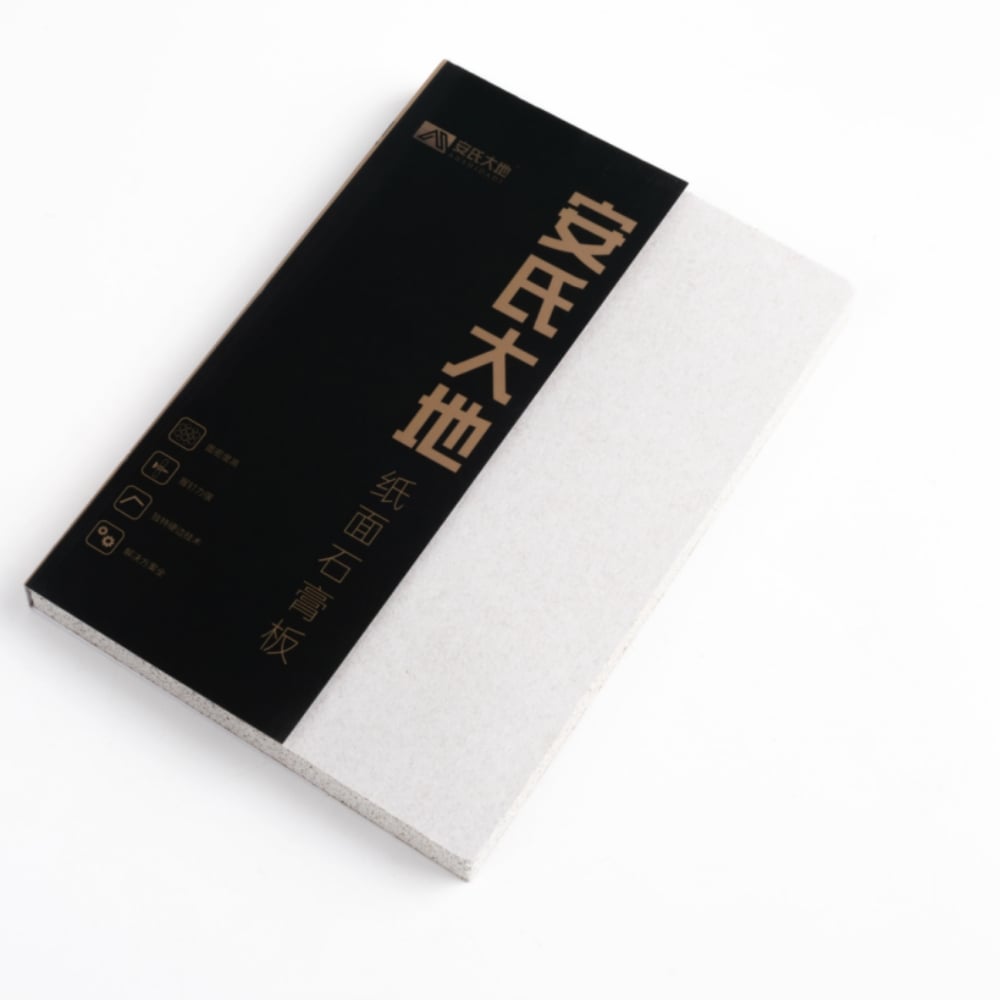
From raw gypsum mineral processing to finished panel packaging, every stage of tapered edge gypsum board manufacturing is governed by precise dimensional tolerances, material composition ratios, and performance criteria. Whether you are evaluating a new supplier or verifying compliance with regional building codes, a clear grasp of these production specifications is essential. This article outlines the core dimensional standards, core composition requirements, and surface facing specifications that define a quality tapered edge gypsum board.
Dimensional Standards for Tapered Edge Gypsum Board
Standard Panel Lengths and Widths
The most common width for tapered edge gypsum board is 1200 mm, which aligns with standard stud spacing systems used globally. Panel lengths typically range from 2400 mm to 3600 mm, with 2400 mm and 3000 mm being the most frequently specified lengths in commercial construction. Some production lines also manufacture tapered edge gypsum board in 4800 mm lengths for high-bay applications where fewer horizontal joints are desirable. Width consistency across a production batch is critical, and reputable manufacturers maintain width tolerances within plus or minus 3 mm.
Thickness Tolerances and Edge Geometry
Tapered edge gypsum board is produced in thicknesses ranging from 9.5 mm to 25 mm, with 12.5 mm and 15 mm being the dominant specifications for partition walls and ceilings. The taper depth along the long edge is typically between 1.0 mm and 2.0 mm, sloping gradually over a width of approximately 50 mm to 60 mm from each longitudinal edge. This taper geometry is a defining characteristic of tapered edge gypsum board because it creates the recessed channel that accommodates joint treatment. Thickness tolerance across a single panel must not exceed plus or minus 0.5 mm per international quality benchmarks. Any deviation beyond this range can compromise joint flatness and finishing quality in the installed system.
Core Composition and Density Requirements
Gypsum Core Mineral Purity
The core of every tapered edge gypsum board consists primarily of calcium sulfate dihydrate, commonly referred to as gypsum mineral. High-quality tapered edge gypsum board production requires a gypsum purity level of at least 85 percent, though premium-grade panels often use mineral with purity exceeding 92 percent. The calcination process converts raw gypsum into calcium sulfate hemihydrate, or stucco, which is then rehydrated during board forming to re-create the crystalline dihydrate structure that gives tapered edge gypsum board its dimensional stability and fire-resistance properties. Consistent mineral purity directly affects core strength, dimensional stability, and nail-pull resistance in the finished tapered edge gypsum board.
Additives and Density Control
Tapered edge gypsum board manufacturers introduce a range of controlled additives into the gypsum slurry to optimize core properties. Foam agents are injected to reduce core density and lower panel weight without significantly sacrificing strength, making tapered edge gypsum board easier to handle on construction sites. Starch binders enhance the bond between the gypsum core and the paper facing, while glass fiber reinforcement may be included in specialty tapered edge gypsum board grades to improve impact resistance. Core density for standard tapered edge gypsum board typically falls between 750 kg per cubic meter and 900 kg per cubic meter. Maintaining this density range is essential for achieving target mechanical properties including flexural strength and surface hardness.
Surface Facing and Finishing Specifications
Paper Facing Quality Criteria
The front face of tapered edge gypsum board is covered with a smooth, multi-ply paper liner that is designed to accept paint, texture coatings, and adhesive wallcoverings. This face paper must exhibit adequate tensile strength to survive handling during installation without tearing, and its surface must be free from wrinkles, blisters, or delamination that would affect the finish quality of tapered edge gypsum board. The rear face uses a heavier, more absorbent paper that bonds tightly to the core during production. Both facing papers are applied under controlled tension as the gypsum slurry spreads between them on the forming belt, ensuring uniform adhesion across the full panel area of each tapered edge gypsum board.
Moisture Resistance and Fire Performance Ratings
Standard tapered edge gypsum board is formulated for interior dry applications, but moisture-resistant and fire-rated variants are also part of the standard production range. Moisture-resistant tapered edge gypsum board incorporates a silicone or wax emulsion into the core slurry and uses water-repellent facing paper to reduce surface absorption. Fire-rated tapered edge gypsum board contains glass fiber reinforcement and specific mineral additives that slow heat transmission and maintain structural integrity under high-temperature exposure. Both variants retain the same tapered longitudinal edge geometry, ensuring they can be combined with standard tapered edge gypsum board panels within a single jointing system. Fire-performance classification is typically verified through standardized furnace testing, with common ratings spanning from 30 minutes to 120 minutes depending on system design.
FAQ
What is the standard taper depth for tapered edge gypsum board?
The standard taper depth for tapered edge gypsum board is typically between 1.0 mm and 2.0 mm, running along a tapered zone of approximately 50 mm to 60 mm from each long edge. This recessed geometry allows joint compound and tape to sit flush with the panel face after finishing.
How does core density affect tapered edge gypsum board performance?
Core density directly influences the mechanical performance of tapered edge gypsum board. Higher-density cores provide better nail-pull resistance, improved flexural strength, and enhanced surface hardness, while lower-density cores reduce panel weight. Standard tapered edge gypsum board targets a core density between 750 and 900 kg per cubic meter to balance these competing requirements.
Can tapered edge gypsum board be used in moisture-prone areas?
Standard tapered edge gypsum board is intended for dry interior environments. For areas with elevated humidity, a moisture-resistant grade of tapered edge gypsum board is available with water-repellent core additives and treated facing paper. Always verify the product specification sheet to confirm suitability for the intended application environment.