 ×
×

Content Preview:
One of the most frequent questions we get on WhatsApp is: "Can I use my ceiling U-channels for a small partition wall?"
The short answer? You could, but you shouldn't.
While both systems are made from galvanized steel, they are engineered for completely different types of "stress." Ceiling systems are designed to resist gravity (vertical load) and prevent sagging over large spans. Partition systems, on the other hand, are built to resist lateral pressure (side load)—think of someone leaning against a wall or a door slamming.
The Structural Anatomy
Ceiling Systems: Focus on Main Channels and Furring Channels. The key here is the suspension wire and the clip strength.
Partition Systems: Focus on Studs and Tracks. Here, the "flange" height of the C-stud determines how much weight the wall can carry.
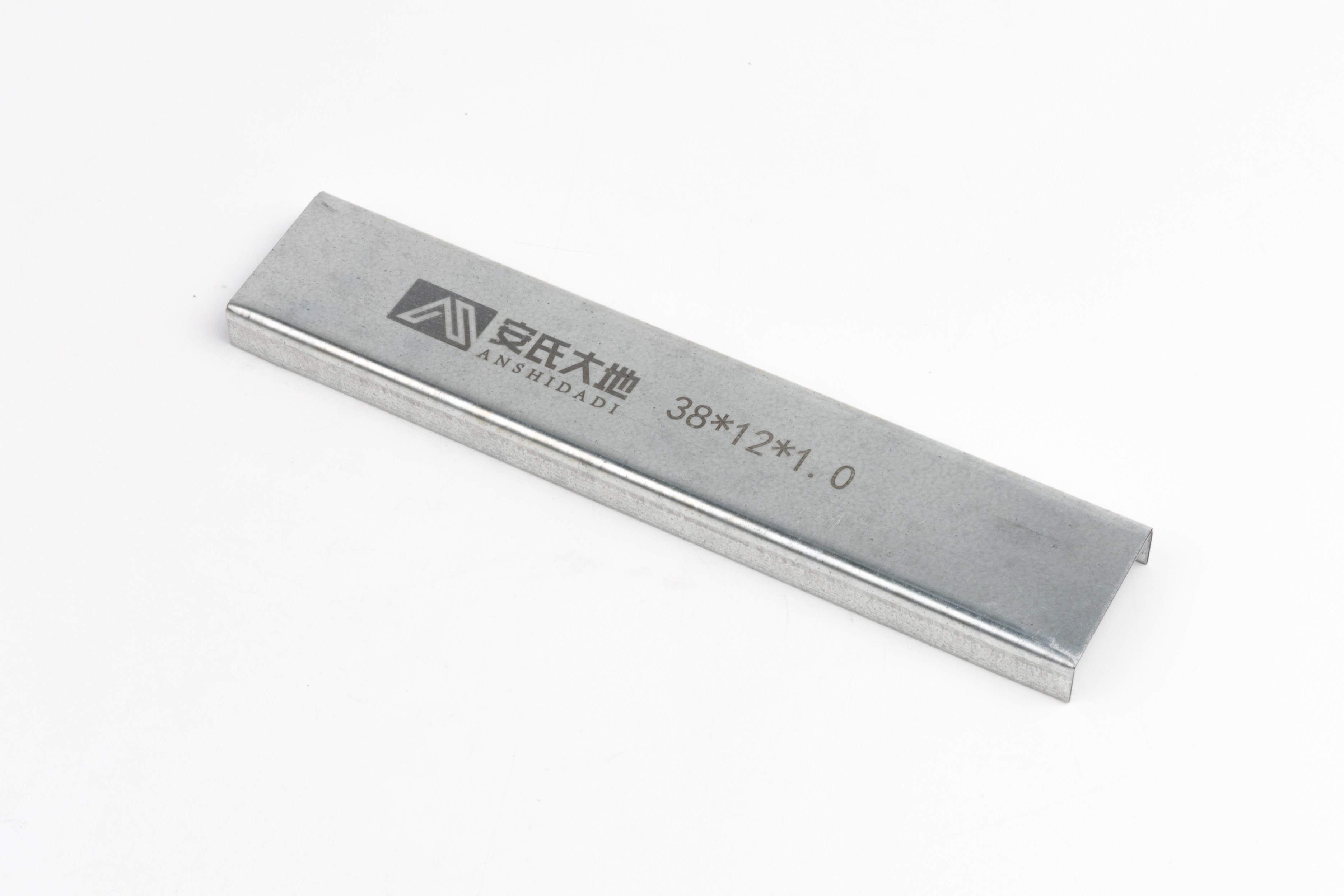
At our factory, we produce specialized profiles for each. For example, our 38x24mm components are optimized for T-bar ceilings where weight-to-strength ratios are critical. If you use a partition stud for a ceiling, you’re adding unnecessary weight and cost. If you use a ceiling channel for a wall, you’re risking a structural collapse under pressure.

In this technical breakdown, we look at:
----
When builders or DIY enthusiasts reach for a leftover ceiling U-channel to frame a small partition wall, they often assume that “steel is steel.” This assumption can lead to catastrophic failure—not immediately, but over time. A ceiling channel installed vertically in a wall behaves unpredictably under lateral stress. Unlike a proper partition stud, which has a reinforced web and taller flanges to resist bending, a ceiling channel will bow, twist, or buckle when someone leans against the wall or when a door is slammed repeatedly.
In laboratory tests conducted at our in-house structural lab, a 2.5-meter partition wall framed with standard 38x12mm ceiling U-channels failed at just 35% of the lateral load that a proper 50x25mm partition stud with 0.6mm gauge could withstand. The failure mode was sudden and dangerous: the flanges spread apart, the web folded, and the entire section collapsed. In contrast, the partition stud deformed gradually, giving clear visual warning before reaching its limit.
Building codes and engineering standards define strict deflection limits for drywall partitions. For a 3-meter-high wall, the acceptable deflection under a 250N horizontal point load (approximately the force of someone leaning casually) is typically L/240, or about 12.5mm. Ceiling channels are not designed or tested for this metric. Their deflection curve under lateral load is nonlinear and unpredictable.
Our factory tests show that a ceiling U-channel installed as a vertical stud will deflect up to 28mm under the same load—more than double the allowable limit. This not only cracks the drywall but also compromises screw retention. Over time, screws loosen, joints fail, and the wall develops a characteristic “wavy” appearance. Worse, the channel may yield permanently, meaning the wall never returns to true even after the load is removed.
For partitions installed in semi-exposed environments—such as warehouse offices, loading bays, or temporary construction site barriers—wind load becomes a critical factor. Unlike gravity, wind applies dynamic, oscillating lateral pressure. Ceiling channels lack the torsional rigidity to handle this. Their open section and shallow flanges allow twist under alternating loads.
We recently consulted on a case where a contractor used ceiling U-channels to frame a 2-meter-high partition separating a covered outdoor workspace from a storage area. After a mild windstorm (sustained 50 km/h with gusts to 70 km/h), the entire wall leaned 15 degrees. The channels had twisted and the screw connections had elongated. Replacing the wall cost three times the original budget. Had proper partition studs been used—specifically our 75x35mm profiles with 0.8mm gauge—the wall would have remained plumb.
One of the most common questions we hear is: “Can I save money by using a lighter gauge steel?” The answer is yes—but only if you understand the trade-offs and stay within safe limits.
For interior, non-load-bearing partitions in residential or low-traffic office settings, a light gauge partition stud (0.45mm to 0.55mm, e.g., our 50x25x0.5mm profile) is perfectly adequate. It offers enough flange height and web strength to resist daily lateral forces like leaning, vacuum cleaner bumps, or children playing. The savings over heavy gauge can be 20–30%, with no safety compromise.
For high-traffic areas, corridors, hospital rooms, school hallways, or any wall that will mount shelves, coat hooks, or handrails, a medium gauge (0.6mm to 0.8mm) is necessary. This range provides the screw pull-out resistance and impact strength required for public use.
Heavy gauge (1.0mm and above) should be reserved for:
Fire-rated assemblies
Walls over 4 meters in height
Partitions with door frames (especially heavy or fire-rated doors)
Any wall that may experience forklift traffic, pallet impact, or seismic loads
The mistake many buyers make is using heavy gauge everywhere “just to be safe.” This adds unnecessary material cost, increases building weight, and makes installation more difficult. Conversely, using light gauge ceiling channels as wall studs is never safe, regardless of the gauge.
| Application | Recommended Product | Gauge | Why |
|---|---|---|---|
| Suspended ceiling (T-bar) | Ceiling U-channel, 38x24mm | 0.4–0.5mm | Optimized for vertical load, lightweight |
| Office partition, low traffic | Partition stud, 50x25mm | 0.5mm | Lateral strength, cost-effective |
| School corridor partition | Partition stud, 70x35mm | 0.7mm | Impact resistance, door mounting |
| Outdoor covered walkway wall | Partition stud, 100x40mm | 0.9mm | Wind load, dynamic lateral force |
| Any wall with shelves or handrails | Partition stud, 65x30mm minimum | 0.6mm | Screw pull-out, point load resistance |
At our factory, we produce both ceiling channels and partition studs because each serves a unique structural purpose. The few cents saved by repurposing a ceiling channel for a wall is never worth the risk of injury, property damage, or costly rework. Always consult the manufacturer’s load tables and, when in doubt, choose a profile specifically engineered for your application.
If you need help selecting the right profile for your next project—whether it’s a lightweight suspended ceiling or a high-impact partition wall—our technical team is available to review your plans and recommend the optimal gauge and profile shape. Safety isn’t an accident. It’s engineered.

 EN
EN


 Hot News